


TL;DR
- Midnight builds on the classic Bitcoin-style UTXO model but extends it to support privacy, selective disclosure, and shielded value movements.
- Instead of tracking balances like account-based chains, Midnight treats value as independent units, enabling stronger privacy and natural parallel processing.
- A nullifier system replaces traditional "spent" flags, allowing hidden values to be proven without exposing which UTXO was used.
- The extended UTXO structure lets users choose between public and shielded tokens, shaping how identity, ownership, and metadata remain protected.
- This model helps developers build predictable, auditable applications while unlocking real scalability and a safer environment for sensitive data.
- Midnight uses the UTXO lifecycle-creation, existence, consumption, and historical preservation-as the foundation for its privacy-first design.
There's a simple reason why the blockchain world keeps returning to the UTXO model: it solves real problems that account systems can't avoid. It treats value like discrete digital coins. It lets transactions run in parallel without stepping on each other. And it creates a structure that aligns naturally with privacy. What Midnight does is take this earlier idea and turn it into something capable of supporting real-world confidentiality, selective disclosure, protected metadata, and modern decentralized applications. The result is not just another UTXO chain. It's an upgraded foundation designed for the coming era of private, regulated, user-controlled Web3 systems.
Many people entering Web3 expect balances to work like a bank account. Midnight deliberately avoids that path. It builds instead on a model originally proven by Bitcoin and refined by Cardano, but it adds another layer that lets each unit of value carry privacy, ownership rules, and protection mechanisms. This shift makes Midnight's architecture feel different at first glance. But once the logic clicks, the advantages become clear: predictable execution, stable state growth, and the ability to secure sensitive data without creating complex workarounds.
This article explores how Midnight extends the UTXO model, how value is represented, and why this approach is central to its mission. It's not just a technical choice. It's a philosophical one-about how digital value should behave, how privacy should be protected, and how blockchain should scale in a world where every interaction leaves a footprint.
Understanding the UTXO Model: The Digital Cash Mindset
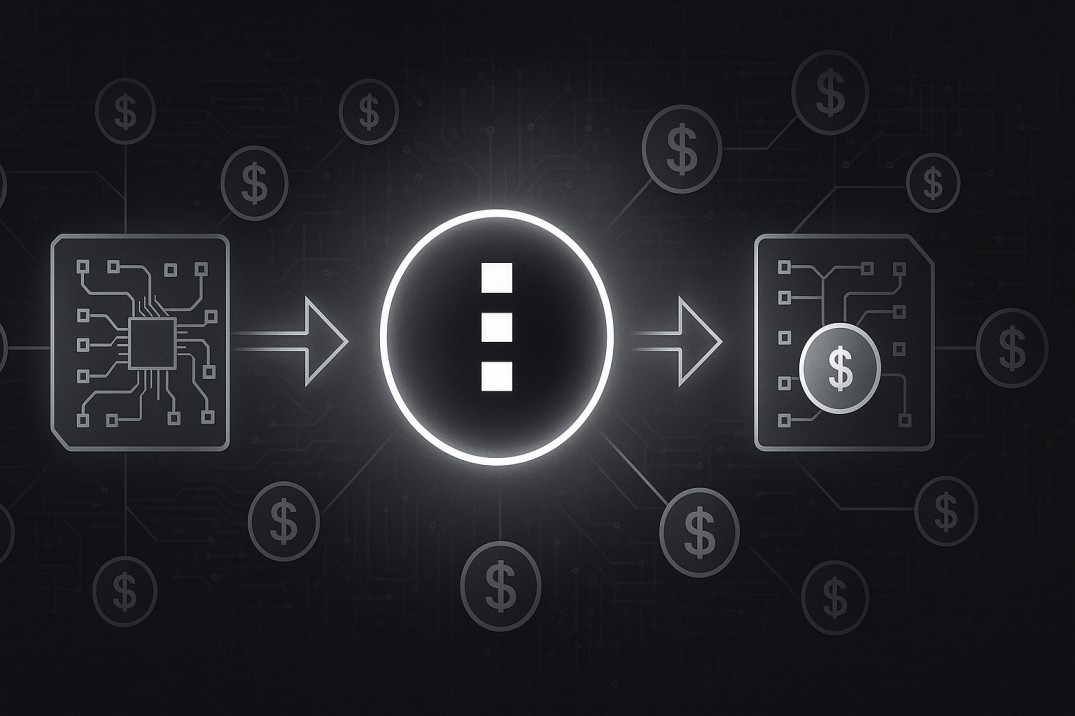
To understand why Midnight uses UTXOs, it helps to start with the digital cash metaphor. UTXO stands for "Unspent Transaction Output," but that name doesn't help much at first. A better way to think about it is to imagine each piece of value as a bill in your wallet. You don't partially tear a bill to spend a specific amount. You hand over the entire bill and receive new ones as change. Every transaction destroys the old bills and generates new ones. Midnight uses the same logic, except the "bills" are digital, verifiable, and linked to cryptographic ownership.
Where account-based systems record a constantly changing balance, UTXO-based chains only track the unspent pieces of value that currently exist. There's no global balance to update. Instead, the state of the network is simply the list of which units of value are still available. This independence between units creates a natural structure for parallel transactions. Two values owned by two different people can move at the same time without touching the same part of the state.
What Midnight adds to this picture is the ability for each of those pieces of value to hold privacy. Instead of publicly attaching value to an address, Midnight embeds it inside commitments-mathematical structures that hide the contents without reducing verifiability. This lets users hold, move, and redeem value without exposing it to the world. It's digital cash with stronger cryptography and a much more flexible design.
Why UTXOs Matter for Midnight's Privacy Mission
Midnight's main goal is to let people use Web3 services without exposing unnecessary data. That includes financial amounts, sender and receiver identities, and metadata that could link a user to their activity. The UTXO model is naturally suited to this because it avoids the central balance problem of account systems. When all value moves through one balance, privacy tools have to hide the relationship between incoming and outgoing movements. With UTXOs, each unit stands apart, so privacy can be applied at the level of each individual piece.
Another advantage is that UTXOs don't carry the detailed history that accounts do. In an account system, your balance is the sum of everything that has ever happened to your address. This creates a chain of events that is easy to trace, even if developers try to hide it. UTXOs break that pattern. Once a unit of value is consumed, its identity disappears, and new ones appear. There is no long-lived identity to track. Midnight builds further on this idea by masking not just the values but also the connections between them.
Midnight takes this even further with selective disclosure. Users can choose when to reveal certain data and when to keep it private. Instead of relying on a single address that must be shielded every time, Midnight gives each UTXO control over how it should behave. That flexibility is crucial for real-world use cases like data compliance, business workflows, cross-border finance, and user-controlled identity.
Midnight's Extended UTXO Model: Privacy Without Sacrificing Transparency
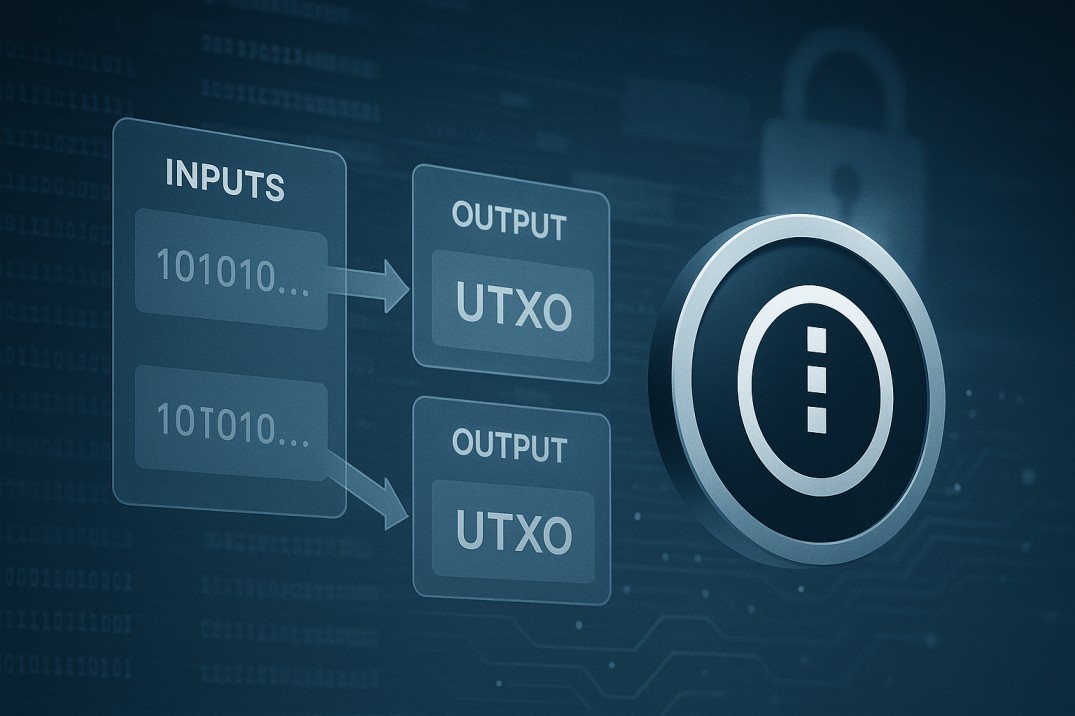
Midnight extends the traditional model by introducing commitments and nullifiers. A commitment hides the value and owner of a UTXO while still proving that it's valid. A nullifier ensures that once a UTXO is spent, it can't be used again. The key is that the nullifier doesn't reveal which UTXO it came from. This creates a structure where the network can prevent double spending without exposing private details.
This design lets Midnight support shielded tokens. These tokens hide their amounts, ownership, and movement patterns, but still work within the same UTXO structure. The network doesn't need to know who owns what to verify transactions. The only information it needs is whether a unit of value has already been spent. That shift is small on paper but massive in practice because it unlocks privacy by default.
What makes this model compelling is how well it balances auditability and confidentiality. Developers can build applications where users interact privately, but the app itself maintains predictable logic. Because UTXOs represent separate objects, they can be proven, consumed, and created in a way that keeps smart contract behavior stable. Midnight doesn't rely on a single mutable balance, which is often a source of complexity in account-based privacy systems.
The Lifecycle of Value on Midnight
The value of Midnight passes through a lifecycle. It is created, held, consumed, and replaced by new outputs. Each stage is cryptographically defined, and the chain never has to retroactively update past data. That structure helps keep the long-term state manageable. Nodes only need to track the active set of unspent outputs and the list of nullifiers. Everything else becomes part of historical storage.
This lifecycle also helps users understand how privacy works. Once a UTXO is consumed, it's gone forever. The network doesn't need to keep track of it. Instead, it only needs to track the nullifier, which proves that the value was used. The new UTXOs created from that transaction can be shielded or unshielded depending on what the user wants. Midnight builds on this flexibility by supporting tokens with different privacy behaviors.
Over time, this creates a clean separation between active state and historical data. The network doesn't become bloated with old information. Each transaction leaves behind a proof that it was valid, but not a long-lived balance that must be updated repeatedly. This improves scalability and makes it easier for nodes to maintain accurate state without handling enormous amounts of legacy data.
Why the UTXO Model Enables Natural Parallelism
One of the most powerful advantages of UTXOs is that they avoid global locks. Account-based chains often have to process transactions in a strict order. If two transactions try to modify the same account, one must wait. Midnight avoids this bottleneck by letting each UTXO be spent independently. If two transactions use different UTXOs, they can be validated at the same time without interference.
This natural parallelism becomes even more important when privacy proofs are involved. Generating and verifying cryptographic proofs can be intensive. Processing them in parallel avoids congestion and ensures that private transactions do not slow down the whole network. Midnight's design ensures that private activity remains efficient and predictable, supporting large-scale applications without creating bottlenecks.
In real-world applications, this parallel structure supports business processes, automated interactions, and high-frequency transactions. Instead of creating workarounds to handle busy periods, Midnight's architecture scales horizontally. Each cluster of UTXOs represents an independent lane of activity, and the system can grow by adding more lanes. This structure mirrors how modern distributed systems are built.
How Midnight Represents Value: Granular, Flexible, and Private
The value of Midnight isn't tied to an identity or an address. It lives inside independent objects. Each UTXO has a value and an owner, but both can be hidden inside commitments. This structure gives users control over how much information they reveal. They can use shielded tokens when privacy matters and unshielded tokens when clarity is needed. The choice happens per transaction, not per account.
This approach provides more flexibility than traditional privacy systems. Instead of shielding an entire account balance, users can shield only the transactions that require confidentiality. Midnight uses selective disclosure to help users prove specific facts-like ownership or payment confirmation-without revealing the entire history. That balance between privacy and verifiability is one of the network's core features.
Developers benefit from this design too. They can build tools that interact with value directly, without guessing the state of a mutable balance. Each UTXO is a complete record of value, ownership, and privacy settings. Smart contracts can reference them, verify them, and use them to create new ones. Because each unit stands alone, the logic stays clean and traceable even when privacy is applied.
Privacy, Metadata, and Real-World Use Cases
Metadata often reveals more information than the value itself. Who contacted whom, when a payment happened, and what pattern the transactions follow can expose sensitive relationships. Midnight's UTXO model is designed to protect this metadata by preventing observers from linking UTXOs together. Shielded tokens hide not just the value but also the recipient, the sender, and the resulting outputs.
This structure unlocks practical use cases that go beyond simple transfers. Businesses can handle confidential invoices. Individuals can protect their financial history. Developers can build apps that use private data proofs without exposing user identities. Midnight makes it possible for users to control what information they reveal, whether it's to a regulator, a merchant, or an application.
By extending the UTXO model, Midnight creates a more nuanced relationship between value and identity. Users can choose exactly how they want their data to be handled. This aligns closely with real-world privacy expectations, where people want control over their information without sacrificing usability.
Why UTXOs Align With Midnight's Long-Term Vision
Midnight's architecture is built around the idea that privacy, scalability, and determinism must coexist. The UTXO model provides a structure where these goals are easier to achieve. By keeping value granular, the network avoids many of the problems that arise when a single balance becomes the focal point of every interaction. Midnight uses this granular structure to support shielded transactions, predictable contract behavior, and parallel processing.
This isn't just a technical preference. It's a foundation for long-term growth. As Web3 evolves, applications will demand stronger protections around data and identity. Midnight's extended UTXO design anticipates that shift. It gives developers a stable environment where transaction logic doesn't break unpredictably. It gives users confidence that their data stays in their hands. And it prepares the ecosystem for real regulatory and business needs without undermining privacy.
Over the next few years, networks that rely heavily on mutable account states may struggle with congestion, privacy complexity, and unpredictable behavior. Midnight positions itself differently. It uses a structure that has already proven its reliability in cryptocurrencies but elevates it with modern cryptography and flexible privacy. It's an architecture built to last.
A Closer Look at the Differences
The table below breaks down how the account model and the UTXO model behave at a deeper level, and why these differences matter for Midnight’s design.
- Value storage
Account systems keep a single changing balance. UTXO systems treat value as separate, unchangeable coins. This structure makes features like shielded tokens possible on Midnight. - Transaction handling
Accounts rely on updating a shared state. UTXOs shift from one state to another without altering past data, giving Midnight a clearer audit trail and easier provability. - Concurrency
Account-based chains often need to lock a balance before processing it. UTXO chains don’t rely on locks, which opens the door for much higher parallelism. - Privacy model
Accounts usually mix the entire balance when privacy features are used. UTXOs provide privacy on a per-coin basis, letting users choose exactly what they want to keep private. - Double-spend protection
Accounts check that a balance is sufficient. UTXO systems use nullifiers to ensure the same coin can’t be spent twice, even when the values are hidden. - State growth
Accounts tend to grow without a strict limit, since every account adds to the global state. UTXO chains only track active outputs, which helps keep the long-term state manageable. - Determinism
Account updates may depend on the order transactions are processed. UTXOs avoid this issue, making execution more predictable.
Conclusion
Midnight's extension of the UTXO model is not a cosmetic change. It's a deeper rethinking of how digital value is created, moved, and protected. Instead of forcing all activity through a single balance or identity, Midnight breaks value into independent units that can be shielded, disclosed, or traced when necessary. This creates a model where privacy becomes natural, parallelism becomes expected, and scalability becomes attainable.
The UTXO model has been around since the earliest days of blockchain, but Midnight shows that it still has room to grow. By reimagining how value should behave in a modern Web3 environment, Midnight offers a cleaner, safer, and more predictable framework for the next generation of applications. It's digital cash upgraded for a private, interconnected world.
READ MORE: Why COTI Could Be the "HTTPS Moment" for Blockchain