


TL;DR
- Miden is a ZK rollup for Ethereum built around edge execution, where users run transactions locally and submit proofs instead of raw data.
- This design removes global re-execution, reduces state bloat, and makes strong privacy a native feature.
- Accounts behave like isolated state machines, enabling safe parallelism and flexible programmability.
- A UTXO-like note system unlocks private transfers, atomic swaps, and intent-based interactions.
- Developers write in Rust/WASM, and the chain supports both private accounts and public network accounts for shared liquidity.
- Miden is approaching mainnet and positioned as a foundational shift: computation at the edge, verification on-chain.
If blockchains were designed today-with modern cryptography, zero-knowledge proofs, modern developer languages, and realistic expectations of global-scale finance-they would look very different from Bitcoin and Ethereum. They would look a lot like Miden.
Miden, a zero-knowledge (ZK) rollup built for Ethereum, introduces an entirely new paradigm known as the edge blockchain, where execution and state move from the network to the user. Instead of the chain re-executing every transaction, users run computations locally, generate ZK proofs, and submit only succinct evidence to the network. The result is a rollup that inherits Ethereum's security while enabling scalability, privacy, parallelism, and rich programmability-without forcing developers to learn new languages.
This is one of the most ambitious attempts to rebuild blockchain fundamentals from first principles, and it represents what many consider the third major inflection point in crypto architecture.
What Is Miden? A New Class of ZK Rollup
Miden is a ZK rollup designed for scalable, private, and secure execution built on a simple idea: the network should verify proofs, not re-execute transactions. Users keep their own state, run their own computations, and send ZK proofs to the chain. Miden verifies these proofs, updates public state where necessary, and maintains network integrity.
This architectural shift eliminates the largest bottlenecks in blockchains-execution bloat, state bloat, and privacy leakage-while opening the door to use cases that were previously impossible on-chain.
Miden is built around four core innovations:
- Edge Execution
Users execute transactions locally and keep their account states off-chain. The network only checks ZK proofs and updates commitments, removing the need for global re-execution. - Client-Side ZK Proving
All computation happens client-side. The chain validates proofs that represent anything-from a payment to a complex ML model run-at minimal cost. - Actor Model + ZK Proofs
Each account functions as an isolated state machine (actor) with well-defined interfaces. State transitions are provable, enabling massive concurrency. - Native Note System (UTXO-like)
Miden introduces notes, portable objects that hold assets and programmable conditions. Notes enable private transfers, atomic swaps, and advanced logic like time-locked spends or recallable payments.
These innovations position Miden as one of the most advanced ZK systems being built today.
Why Edge Execution Matters
Edge execution is the core principle that sets Miden apart from traditional blockchains, fundamentally redefining who does the work in a decentralized system. On conventional chains like Bitcoin, Ethereum, or even Solana, every node in the network must execute and re-execute all transactions to validate the chain. This approach inherently limits scalability, creates massive computational and storage burdens, and exposes sensitive transaction data to the public. The cost of this redundancy is significant: networks become bottlenecked by the slowest node, throughput is constrained, and maintaining up-to-date state grows increasingly complex as usage scales. Privacy, meanwhile, remains practically impossible, as nodes must see all transactional data to validate correctness.
Miden flips this model by moving execution and state management to the edge-that is, directly to users' devices. Users locally compute their transactions, maintain their account state, and generate zero-knowledge proofs that cryptographically certify the validity of their actions. Only these compact proofs, rather than raw transaction data, are submitted to the chain. By doing so, Miden eliminates the need for global re-execution, dramatically reducing execution bloat and enabling devices as modest as smartphones to participate in validation.
Edge execution also addresses state bloat, one of the largest obstacles to scaling blockchains. Since users self-custody their state and broadcast only small commitments to the network, nodes no longer need to store full account histories or large contract states. This minimizes storage requirements while maintaining the verifiability and integrity of the blockchain. Unlike traditional scaling solutions such as sharding or stateless nodes, which introduce trade-offs in security or composability, edge execution preserves both decentralization and system composability.
Finally, privacy emerges as a natural consequence. When computation occurs locally, transaction details, balances, and smart contract logic are never fully exposed on-chain. Users retain self-custody of sensitive data, while the network only sees verifiable commitments, enabling true privacy by default. Edge execution also allows complex smart contracts to run without network-imposed gas limitations, unlocking new use cases such as AI-driven contracts, institutional financial applications, or programmable payments that would be prohibitively expensive on traditional chains.
In short, edge execution is not merely a technical innovation-it represents a paradigm shift in blockchain architecture, where the more work users are willing to perform locally, the more scalable, private, and cost-effective the network becomes. It aligns incentives naturally: users handle computation and proof generation, and the network focuses on verification and aggregation. This architecture makes Miden uniquely capable of addressing the long-standing trade-offs in blockchain design, creating a foundation for high-throughput, privacy-first, and composable applications that can operate at global scale.
Miden Architecture: A System Built for Parallelism and Privacy
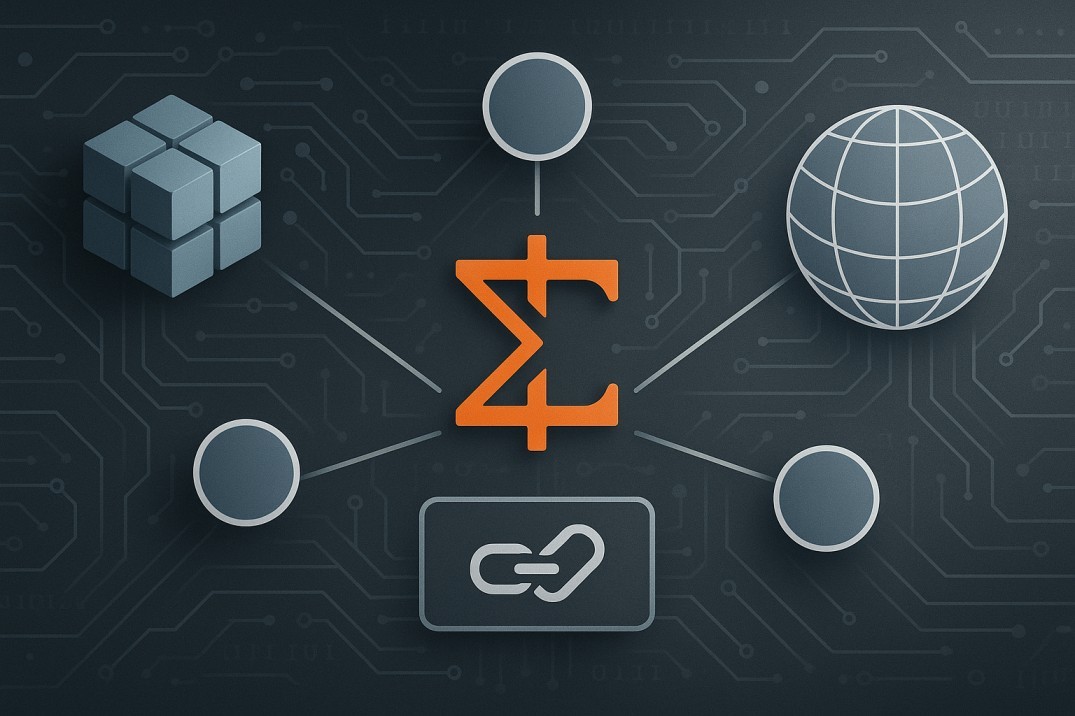
Miden's architecture is built on three fundamental components.
1. Miden VM
A virtual machine engineered for efficient zero-knowledge proving. It supports execution of programs compiled to WebAssembly (WASM), making languages like Rust first-class citizens. This avoids the need for a custom, unfamiliar smart contract language.
2. Actor Model: Accounts as State Machines
Every account in Miden is an independent actor with:
- Its own storage
- Its own logic
- Its own assets
- Its own interface
Transactions update one account at a time, enabling:
- High concurrency
- Safe parallel execution
- Minimal coordination costs
Accounts can be:
- Public accounts - Fully on-chain
- Private accounts - Off-chain state with on-chain commitments only
Private accounts are tiny on-chain (32 bytes) regardless of data size, enabling billions of provable accounts without overweighting the state.
3. Notes: Miden's UTXO-Based Messaging System
Miden introduces notes, an innovative messaging and asset mechanism inspired by UTXO models. Notes act as carriers of value and programmable logic, enabling accounts to communicate asynchronously while maintaining privacy. Each note contains assets along with spend scripts, which are programmable rules defining how and by whom the note can be consumed. These scripts are Turing-complete, meaning they can encode complex logic such as time-locked transactions, recallable transfers, atomic swaps, or conditional spending based on external oracles. Notes are versatile: they can be fully public, partially committed to the chain, or encrypted in future iterations to enhance privacy further. By leveraging this UTXO-like structure, Miden allows multiple accounts to interact in a highly parallelized manner without exposing sensitive information or creating dependencies that slow down execution. In essence, notes provide on-chain intentions: they represent the desired transfer or action without requiring immediate updates to the recipient's state.
How a Transaction Works on Miden
Transactions on Miden follow a novel, two-step approach designed for parallelism and privacy. When transferring assets, the sender first creates a note, moving value from their account into this intermediary object. The recipient then consumes the note, which transfers assets from the note to their account. Importantly, these steps occur independently and locally: the sender does not need to access the recipient’s state, and the recipient does not need to access the sender’s account. Both parties generate zero-knowledge proofs validating their respective steps, which are then submitted to the network for verification.
This design minimizes coordination overhead, prevents execution bottlenecks, and ensures that sensitive account data is never exposed on-chain. By separating creation and consumption, Miden achieves high concurrency, allowing thousands of transactions to be processed simultaneously, all while maintaining cryptographic verifiability and privacy. This is one of the core reasons Miden enables massive concurrency and private execution.
Handling Public Shared State: Network Accounts
While Miden emphasizes edge execution and self-custodied private accounts, it also supports applications that require shared, public state. This is managed through network accounts, which are fully on-chain accounts controlled by the network itself. Users interact with these accounts by emitting notes from their private accounts, representing intended operations such as trades or oracle updates. Block producers detect these notes and apply their effects to the network accounts without requiring further input from the user.
This hybrid approach enables private wallets to safely interact with public systems like AMMs or stablecoin contracts while maintaining confidentiality for the user’s data and actions. By separating private and network-managed state, Miden allows developers to design applications that are both privacy-preserving and composable, offering a level of flexibility that traditional blockchains struggle to provide.
Building on Miden: Rust, WASM, and Tools
Miden's execution environment is designed to be developer-friendly without compromising on cryptographic sophistication. The Miden VM can execute programs compiled to WebAssembly (WASM), which allows developers to use familiar languages such as Rust. This approach avoids the friction of adopting a new, proprietary language while leveraging Rust's strong safety guarantees, memory management, and mature tooling.
Developers can build smart contracts, notes, and complex applications that take full advantage of client-side execution and zero-knowledge proofs. To further simplify development, Miden provides a growing suite of tools and libraries, including ScriptBuilder for constructing notes, midenup for scaffolding projects and managing local proofs, and structured VM error handling for easier debugging. The platform also supports advanced authentication, private multisig accounts, and async execution, ensuring developers can safely experiment and deploy scalable, privacy-oriented applications without worrying about the underlying cryptography.
In short, Miden empowers builders to focus on creating real-world solutions while the system handles the complexity of privacy, concurrency, and proof verification. Miden is quickly becoming one of the most developer-friendly ZK builders' environments.
Real-World Use Cases: Where Miden Changes the Game
Miden’s architecture aligns strongly with real-world needs where privacy, computation, and flexibility must come together.
- Identity and Access Control
Users can prove attributes age, membership, credentials without revealing the underlying data. - Confidential Financial Applications
Private order flow, sensitive portfolio logic, and multi-asset operations can run locally and be verified through proofs. - AI-Enhanced Workflows
Edge devices can run AI inference locally and commit verified outputs to the rollup. - Enterprise and Government Use Cases
Client-side logic mirrors how businesses already operate, making Miden suitable for supply chains, policy automation, and compliance workflows. - Complex Games and Simulations
Game engines run locally, while proofs guarantee fairness and correctness, no need for expensive on-chain computation.
These categories highlight Miden’s unique value: it aligns blockchain architecture with real-world software patterns rather than forcing developers into narrow execution models.
Miden Roadmap: Toward Mainnet
v0.9 - v0.12 are complete, delivering:
- Network accounts
- Secure storage hashing
- Transaction summaries
- Private multisig
- Private note routing
- ECDSA signing
- midenup
v0.13 - v0.15 (coming next):
- 500 TPS throughput
- Bridging to Ethereum and Agglayer
- Programmable assets (private stablecoins)
- Long-running clients
- Mainnet launch (v0.15, late March 2026)
Miden is rapidly approaching production readiness.
Ecosystem and Pioneer Program
Miden supports an expanding ecosystem through its Pioneer Program, offering funding, technical support, and partnerships for top teams. Highlighted projects include:
- Qash - Programmable private payments
- Zoro - Oracle-informed hybrid AMM
- Lumina Engine - Institutional-grade dark pool
- Dome - Compliant onchain mixer
- Inicio Labs - Private multisig
- Miden Browser Wallet - Local proving wallet
- Miden Name - Naming service
- Walnut - Playground for testing
This ecosystem shows how versatile private/public hybrids can be.\
Conclusion: A New Blueprint for Blockchain Scaling
Miden represents a philosophical shift in blockchain architecture. By moving computation to users' devices and verifying outputs through zero-knowledge proofs, it defines a new class of rollups designed for the next decade of applications.
This is not just a scalability upgrade, it’s a reimagining of how blockchains should interact with users, developers, and the real world. In a future where apps need privacy, flexibility, and high computational power, Miden positions itself as the rollup that finally bridges the gap between blockchain integrity and mainstream usability.
If executed successfully, Miden could become the blueprint for the next wave of decentralized systems: scalable, private, and powered by the devices we already use every day.


