

TL;DR
- Miden is built around a simple idea: move execution and state to the user's device, not the network.
- Zero-knowledge proofs let users prove transactions without exposing private data.
- Traditional blockchains struggle with scale and privacy because every node must re-run everything.
- Miden's "edge blockchain" model removes that bottleneck and makes privacy the default.
- The vision is a chain that scales globally, supports public and private apps, and keeps self-custody intact.
If Bitcoin and Ethereum were designed today, they would look a lot like Miden. That line sounds bold, but it captures the core of what Miden is trying to do. Instead of tweaking existing blockchain designs, Miden starts from first principles and asks a simple question: what would a blockchain look like if it were designed today, with modern cryptography and real-world usage in mind?
The answer is what the team calls an edge blockchain. In this model, the heavy work of computation and state management does not happen on the network. It happens on the user's device. Your phone, laptop, or server becomes the place where transactions are executed and proven. The blockchain itself becomes a verifier and coordinator, not a giant computer trying to redo everyone's work.
This vision is not about marketing. It is about fixing the structural limits that have held crypto back from mainstream use. Scalability, privacy, and safety were never properly solved in first-generation and second-generation blockchains. Miden's goal is to make those things work together, without breaking the original promises of self-custody and censorship resistance.
The Problem Miden Is Trying to Fix
Traditional blockchains all follow roughly the same pattern. You create a transaction and send it to the network. Miners or validators execute it. Then every other node re-executes it to confirm that the result is correct. This sounds elegant, but it creates three deep problems that get worse as usage grows.
The first problem is execution bloat. Every node doing the same work again and again is incredibly wasteful. It caps throughput to the slowest participant in the network. In practical terms, that means global financial systems are expected to run on hardware closer to a home computer than a data center.
The second problem is state bloat. To re-execute transactions, nodes need the full global state. As more users and apps join the network, that state grows endlessly. Some chains try to fix this with sharding or stateless designs, but those changes come with serious trade-offs in security and composability.
The third and most human problem is privacy. Traditional blockchains cannot offer real privacy because validators must see transaction details to verify them. Everything is visible. This is often framed as "transparency," but in practice it exposes users to surveillance, front-running, and personal risk.
Miden's vision starts with a blunt idea: this model is broken for mass adoption. You cannot scale, preserve privacy, and keep decentralization if every node must see and run everything.
The Edge Blockchain Vision
Miden flips the model. Instead of the network executing your transaction, you execute it. Instead of the network storing your full account state, you store it. Instead of exposing all your data, you generate a cryptographic proof that your action is valid and share only that proof.
This is where zero-knowledge proofs (ZK proofs) come in. In simple terms, a ZK proof lets you prove that something is true without revealing the underlying data. You can prove that you have enough balance to spend, that a rule was followed, or that a contract ran correctly, without showing how.
In Miden's vision, the blockchain becomes a verifier and aggregator. It checks proofs, tracks commitments, and handles public shared state. It does not rerun your code. It does not need your private data. This breaks the link between usage growth and performance decline. More users does not automatically mean worse performance.
This is the heart of the Miden vision: make privacy the default, scale without compromise, and keep self-custody intact.
Why the "Third Inflection Point" Matters
Crypto has already seen two major shifts. Bitcoin proved that you could move value without banks. Ethereum proved that you could program that value. But both were built on the same core architecture: network execution and global state. Over time, projects have improved consensus, added new programming languages, and optimized networking. These changes helped, but they did not change the foundation.
Miden's team believes we are now at a third turning point. Edge blockchains change who does the work and who holds the data. That sounds subtle, but it changes everything. It means privacy is not an add-on. It is built into how the chain works. It means scaling is not a hack. It is an outcome of the design.
This vision is less about competing with existing chains and more about redefining what is structurally possible.
The Case for Edge Execution
Edge execution is not only about performance. It is about incentives. In traditional systems, the network does the work and users wait. In Miden's design, the more work users are willing to do locally, the less work the network needs to do globally.
That alignment matters. It lowers costs, reduces congestion, and makes the system more resilient. A smartphone can verify proofs. Complex programs can be proven and verified without stressing the network.
It also changes what is possible for smart contracts. In a traditional chain, complex logic is expensive and slow. In an edge model, the chain only sees the proof. From its perspective, a simple token transfer and a complex machine learning inference look similar.
This is not about hype. It is about removing artificial ceilings that were baked into earlier designs.
Miden Architecture: Vision in Practice
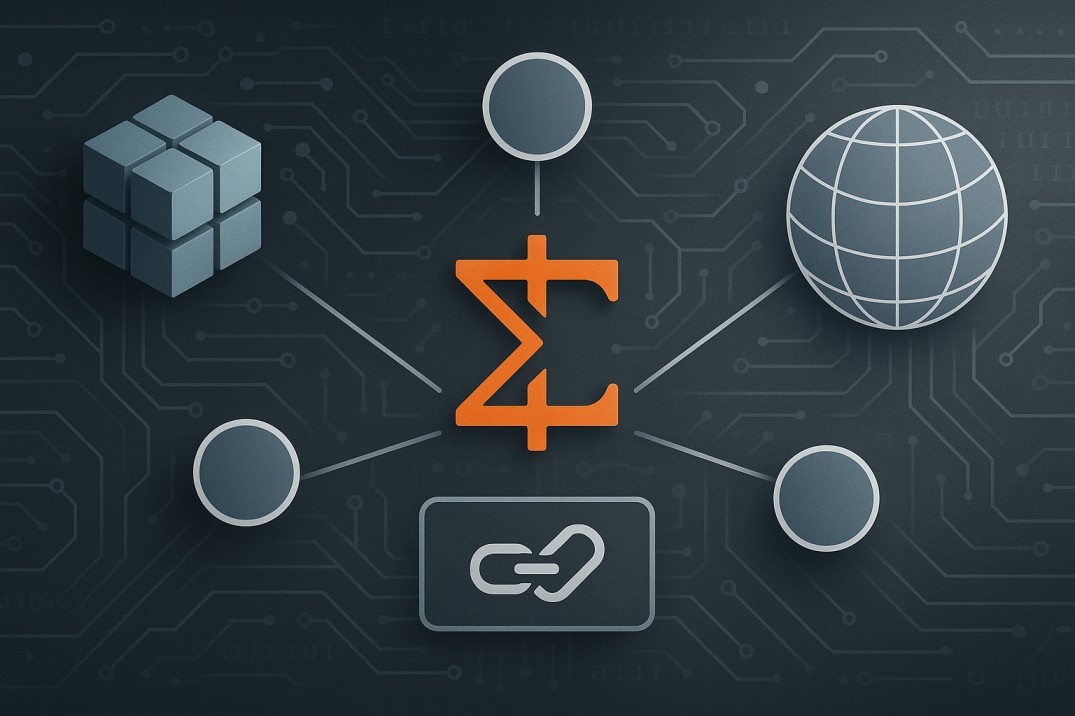
Miden's architecture is designed to make this vision usable, not theoretical. At its core is the actor model, a system where independent entities called actors manage their own state and communicate by sending messages.
On Miden, these actors are called accounts. Each account is its own small state machine. It holds its own code, its own storage, and its own assets. The important difference from other chains is that assets are native and stored locally. Moving assets in or out of an account does not require changing global shared balances.
Accounts can be public or private. Public accounts live fully on-chain. Private accounts live off-chain, with only a compact commitment stored on-chain. A private account can be large, but its on-chain footprint stays tiny. This is how Miden can support massive scale without exploding node requirements.
Notes: A Different Way to Communicate
Accounts communicate using notes, which are inspired by UTXO designs. Notes are not just data packets. They are programmable objects that can carry assets and include rules about how they can be spent.
Each note contains a spend script, which defines who can consume it and under what conditions. This can include time-locks, recall rules, or atomic swaps. In plain terms, a note can say: "this can only be opened by this person, after this time, if this condition is met."
This turns notes into on-chain intentions rather than simple transfers. It allows accounts to interact without tightly coupling their internal state. That decoupling is critical to the edge execution vision.
How Transactions Work in the Edge Model
A transaction in Miden is always a state change of a single account. It can read other accounts and handle many notes, but it only updates one actor's state.
For a simple transfer, the sender creates a note and moves funds into it. The recipient later consumes that note and moves the funds into their own account. These two actions are independent. Each party executes their part locally and generates a proof.
This design means that people do not need to wait on each other's state or lock shared resources. It is naturally parallel and fits the idea of work happening at the edge.
Public Shared State Without Breaking Privacy
Miden's vision is not purely private or purely off-chain. Some applications need shared public state. To support this, Miden includes network accounts.
These are public accounts managed by the network itself. Users interact with them by sending notes. Block producers then apply those notes to update the public state. This keeps the user's private data private while still enabling shared systems like decentralized exchanges or oracle-driven apps.
A private wallet can interact with a public AMM without exposing balances or history. That is not a small feature. It is central to Miden's idea of usable privacy.
Building Without Reinventing Languages
A key part of Miden's vision is lowering the barrier for builders. Instead of creating a new programming language, Miden uses WebAssembly (WASM) as its execution target. Developers can write code in familiar languages like Rust.
Rust is widely used in crypto and traditional systems. It is memory-safe and mature. This choice is practical. It means builders do not need to relearn everything to build private, scalable apps. The Miden VM is designed to be friendly to zero-knowledge proving while still supporting real-world developer workflows. This is less flashy than new languages, but more sustainable.
Why This Vision Matters for Builders
For builders, the vision changes what is possible. Heavy computation no longer breaks the chain. Large private states are not a liability. Applications that mix compliance and confidentiality become realistic.
You can design apps that run complex financial logic locally and only send proofs. You can build systems where user data never touches the public chain. You can create hybrids where public and private components work together instead of fighting each other.
This is not about squeezing a few more transactions per second. It is about unlocking categories of apps that simply do not fit on traditional infrastructure.
Why This Vision Matters for Users
For users, the vision is more human. You keep control of your data. Your balances and history are not public by default. You get better safety without needing to trust centralized services.
Features like recallable transactions, flexible authentication, and social recovery are built into the account model. You are not relying on fragile smart contract add-ons for safety. Privacy reduces your exposure to targeted attacks.And because execution happens locally, you are not waiting for congested networks to process simple actions.
Miden is not designed only for crypto natives. The vision includes institutions, businesses, and real-world finance. Privacy with provable compliance is not a contradiction in this model. You can prove that rules were followed without exposing confidential data. This matters for use cases like payments, asset tokenization, and institutional trading. They cannot exist meaningfully on fully transparent ledgers. The vision is not "hide everything." It is "reveal only what is necessary."
Conclusion
Miden's vision is simple but radical: move work to users, keep data private, and let the network focus on verification instead of execution. It treats privacy as a foundation, not an optional feature. It treats scale as a product of architecture, not an afterthought.
If successful, this approach could make blockchains feel less like fragile experiments and more like serious infrastructure
READ MORE : COTI vs. Mind Network: Why Garbled Circuits May Outrun FHE in the Privacy Race