


TL;DR
- Nasdaq says SEC approval for tokenized stocks is now a top priority
- Crypto chief Matt Savarese says the exchange will "move as fast as we can"
- Proposal aims to let investors trade blockchain-based versions of public company shares
- Nasdaq stresses it isn't "upending the system," but modernizing it responsibly
- Industry momentum grows as Robinhood and Galaxy Digital highlight tokenization's future
Nasdaq is leaning hard into tokenization, and the message from its digital assets chief is pretty clear: this isn't a side experiment - it's one of the most important regulatory pushes the exchange is pursuing right now.
During an interview with CNBC, Matt Savarese, Nasdaq's head of digital assets strategy, said the exchange is ready to respond to whatever questions the U.S. Securities and Exchange Commission sends its way regarding Nasdaq's plan to list tokenized stocks. And they aren't dragging their feet.
When asked whether the SEC could sign off on the proposal before the end of the year, Savarese responded with a calm but firm tone: "We'll just move as fast as we can." He added that the process will largely revolve around public comments and then responding to the SEC's follow-up questions. "We hope to kind of work with them as quickly as possible," he said.
This marks one of the strongest signals yet that a U.S. financial giant sees tokenized markets not as a distant future but an upgrade worth pursuing immediately.
What Nasdaq Is Actually Proposing
Filed on September 8, Nasdaq's proposal asks permission to list tokenized versions of publicly traded stocks on its exchange. These digital assets would essentially be blockchain-based representations of real shares, offering the same economic rights but benefiting from faster settlement, easier custody, and more transparent movement.
It's a version of the market crypto builders have been talking about for years. But this time, the effort isn't being led by a startup - it's the second-largest stock exchange in the world. Savarese made one point especially clear: Nasdaq isn't trying to blow up the existing system. When asked whether this move might ignite a rush among other U.S. exchanges, he pointed to alignment rather than disruption:
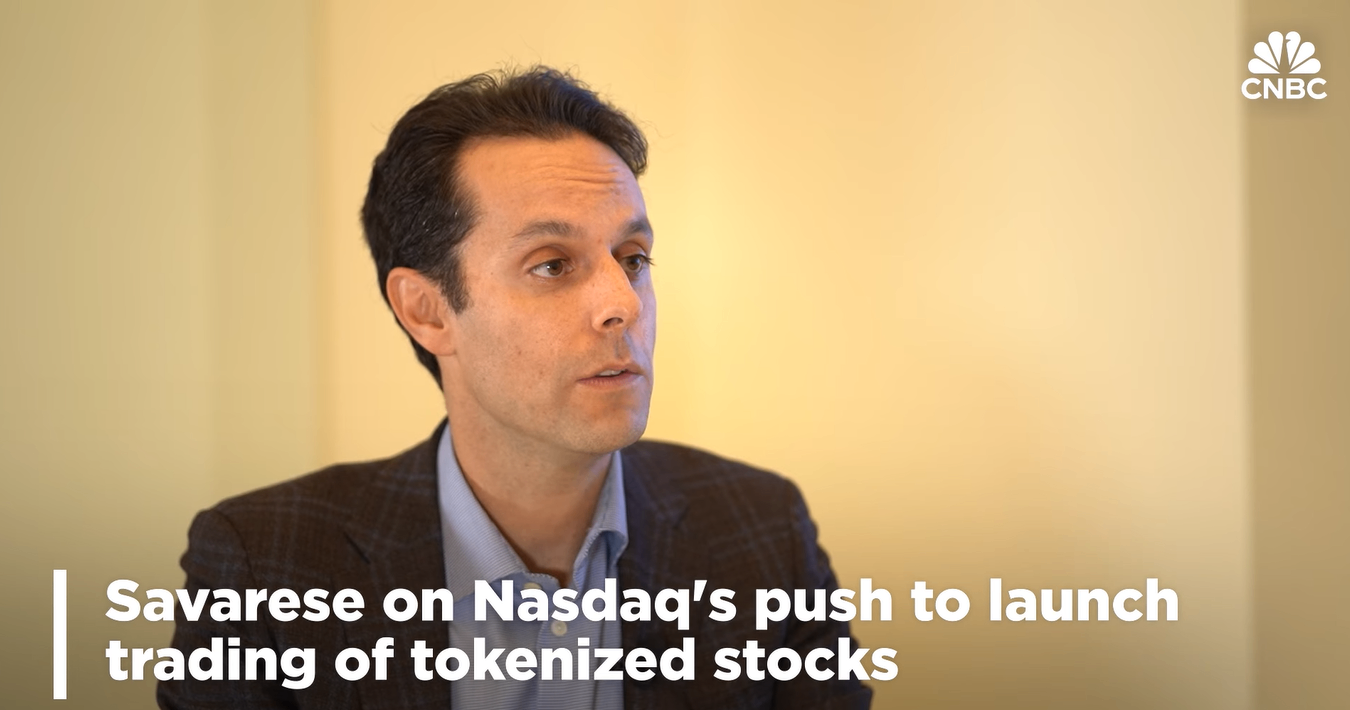
His tone suggested a coordinated modernization effort rather than a confrontation with traditional structures.
A "Responsible, Investor-Led" Approach - Not a Crypto Free-for-All
Savarese repeatedly emphasized a single theme: responsibility. Tokenization may be innovative, but Nasdaq wants the rollout to stay inside the lines regulators already understand.
This matters because many early tokenization experiments happened offshore or inside loosely regulated ecosystems that lacked safeguards. Nasdaq is taking the opposite path - if tokenized markets become mainstream, the exchange wants the foundation to be compliant, transparent, and immediately institutional.
Tokenization Is Already Taking Off Across the Industry
Savarese's comments come at a time when tokenization has become one of the biggest conversations in crypto and traditional finance.
Just last month, Robinhood CEO Vlad Tenev said tokenization would "eventually eat the whole financial system." And earlier this year, Galaxy Digital's Mike Novogratz announced that Galaxy became the first Nasdaq-listed company to tokenize its equity on a major blockchain, choosing Solana to launch the first batch of tokenized shares.
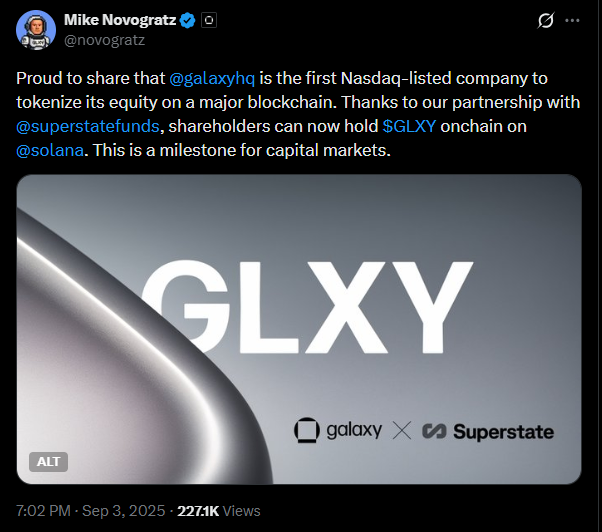
Source: Novogratz on X
That move was widely seen as evidence that tokenization isn't just a concept - it's already happening, and publicly traded firms are experimenting directly.
Why Tokenized Stocks Matter
The idea behind tokenized stocks is surprisingly straightforward: Take traditional equities and give them the functionality of blockchain assets.
That unlocks a few major upgrades:
- Faster settlement (minutes, not two business days)
- Fractional ownership becomes trivial
- Self-custody options for investors who prefer direct control
- Global access without relying on a broker-dealer in every region
- Programmable features, enabling automated dividends or compliance filters
In many ways, tokenization is simply a modernization layer. Investors would still be buying the same shares - but represented digitally in a way that makes them more liquid and more flexible
Looking Ahead
Nasdaq's proposal won't transform markets overnight. But it marks a turning point where the technology powering crypto begins merging with the infrastructure powering Wall Street. If the SEC gives the green light, U.S. investors could soon buy tokenized versions of companies they already hold - except with faster settlement and more flexible ownership.
Savarese's message reflects the mood across the industry: tokenization is coming, with or without hype. And unlike previous cycles where crypto pushed from the outside, this time the world's largest financial institutions are stepping forward first.
The question now isn't if tokenized markets will scale - it's how fast regulators allow it to happen.


