

Summary:
- Argentina's central bank is reportedly evaluating whether to let traditional banks offer crypto services again.
- Local adoption is already massive - six times higher than the regional average, according to Lemon.
- New rules for banks may be approved as early as April 2026, per local industry representatives.
- The move aligns with broader national steps toward regulating - not restricting - crypto activity.
- Coinbase, Binance, and Bybit have already secured regulatory approval to operate in the country.
- A more open financial system is expected to accelerate mainstream adoption, according to exchange insiders.
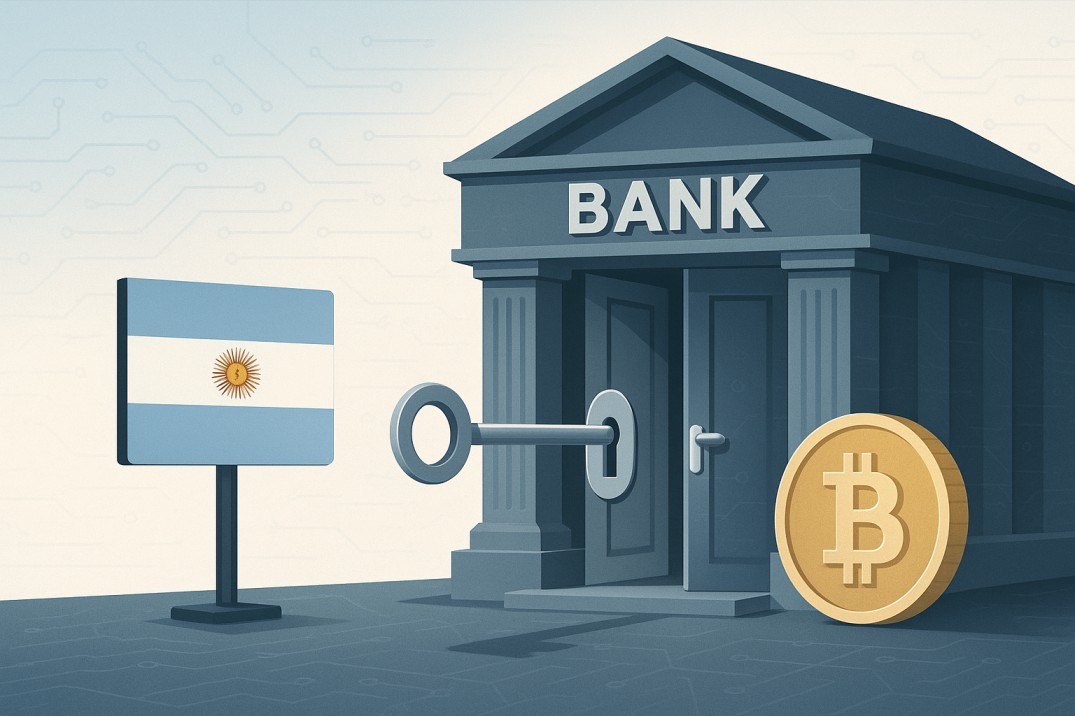
Argentina may be on the edge of a major policy shift. According to a detailed report from the local outlet La Nación, the Banco Central de la República Argentina (BCRA) is actively weighing whether to let traditional banks trade and offer crypto services - something strictly prohibited since 2022.
If confirmed, this would be one of the most significant regulatory reversals since Argentina began tightening rules around digital assets nearly three years ago. The initial ban came at a moment when two major private banks attempted to introduce crypto trading to the public. The BCRA responded within days, stating the initiatives posed risks to consumers and "to the financial system as a whole."
Now, the central bank is reportedly working on what appears to be a complete re-evaluation of that decision. The shift isn't random. It reflects what has quietly become one of the world's most crypto-active populations.
Adoption Is Already Beyond What Regulators Expected
Argentina's crypto culture isn't new - but the scale is becoming difficult to ignore. Based on data cited by La Nación from Lemon, one of the country's leading crypto platforms, Argentines use crypto at a rate six times higher than people in an average Latin American country.
The number itself explains much of what's happening. When a population is already deeply engaged in crypto - whether for savings, remittances, inflation hedging, or trading - regulators eventually shift from restricting it to managing it. This is the pattern that played out in Brazil, Colombia, and Mexico: rapid grassroots adoption followed by gradual institutional acceptance.
Argentina appears to be following the same arc.
Why the Ban Happened in the First Place
To understand why the government is now revisiting the 2022 ban, it helps to revisit the context. Back in May 2022, two of the country's biggest banks prepared to roll out crypto services. The timing clashed with broader financial stability concerns, including inflationary pressure and volatility in digital asset markets.
Within days, the BCRA stepped in. It prohibited banks from offering any crypto services, citing risks to both users and the financial ecosystem. From the regulator's perspective, the ban made sense at the time. Crypto infrastructure was less mature, global regulatory frameworks were still catching up, and several exchanges faced public scrutiny.
But time and adoption - changed the equation.
Draft Rules Are Coming, but No Timelines Are Final
According to La Nación, new cryptocurrency rules specifically addressing how banks can operate in this sector are being drafted. For now, there is no confirmed rollout date. However, insiders told the outlet that the measure could be approved as soon as April 2026.
That estimate didn't come from the central bank itself. Instead, it came from representatives of a locally operated exchange, who appear to be closely connected to the discussions but still outside the formal policymaking process. Even without exact dates, the direction feels clear: the government is preparing for a regulated, institutionally supported crypto environment.
Aligning With the Government's New Direction
This story doesn't exist in isolation. Over the past 18 months, Argentina's government has been actively rewriting the rules around crypto. A few key moves:
In March, the country's securities regulator finalized a new set of rules for virtual asset service providers. This included clear operational requirements, registration procedures, and transparency standards. Since April 2024, crypto service providers have been legally required to register with local regulators.
- Major global exchanges have gained approval
- Argentina did more than regulate - it also began approving international exchanges:
- Coinbase received approval to expand services in January 2024.
- Binance announced in October 2024 that its mobile and web apps were "fully available" after receiving registration as an official crypto service provider.
- Bybit was approved for operations in mid-August 2024.
These approvals were signals. Allowing the world's biggest exchanges to formally operate is rarely the move of a government looking to restrict crypto. Instead, it usually means a regulatory reset is underway. And letting banks trade crypto would be the natural next step.
What Comes Next
Nothing is finalized yet. The BCRA has not issued a public confirmation, and the draft rules remain internal. But the signals from regulators, exchanges, and local reporting point in the same direction, Argentina is preparing for a regulated, integrated environment where traditional banks play an active role in crypto markets.
If approval comes in 2026, the country could become one of the first in Latin America where banks, global exchanges, and local crypto companies all operate under a transparent, unified framework. And given how widespread crypto use already is in Argentina, such a shift would feel less like a leap - and more like a recognition of reality.
READ MORE: Defis Privacy-crisis: How Coti Could be the answer to a $1 billion problem