


Summary:
- YouTube is now allowing US creators to receive payouts in PayPal's stablecoin, PYUSD.
- PayPal's head of crypto confirmed the feature is live and US-only for now.
- The move builds on PayPal's existing relationship with YouTube's monetization ecosystem.
- Stablecoin payouts may become one of the simplest real-world use cases for US creators.
- The decision signals how large platforms are beginning to experiment with digital dollars.
YouTube - one of the world's largest content platforms - has reportedly enabled payouts in PayPal's PYUSD stablecoin for creators in the United States. The update came through Fortune, which cited comments from PayPal's head of crypto, May Zabaneh. According to the report, Zabaneh said the feature is already live, though only available for creators based in the US.
This feels like one of those moments where a small technical toggle could end up having a much larger ripple effect. The majority of crypto integrations tend to come from exchanges, fintech apps or Web3-native products. But when a platform like YouTube takes a step toward digital-asset payouts, the meaning is different - because it taps into a massive economy that already exists.
Millions of creators rely on YouTube income every month, and anything that touches payout infrastructure touches the real economy. PYUSD entering that pipeline hints at how stablecoins could function as a payout layer rather than just a trading asset.
How PayPal Slipped PYUSD Into the System
What makes this update more interesting is that PayPal did most of the groundwork earlier in the year. According to Fortune's reporting, PayPal integrated the ability for recipients to accept payments in PYUSD long before YouTube flipped the switch. The company essentially built the rails first, then let platforms opt into using them.
In the article, Zabaneh noted that the feature is live but limited to US users. That means PayPal's infrastructure is ready, but the regulatory and compliance layers are still shaping how far and how fast these features expand.
PayPal and YouTube aren't new to each other. The payment company has been part of the creator payout system for many years. YouTube creators have long used PayPal to receive AdSense payments, move funds, and run channel-based transactions. But this is the first time that relationship has crossed into stablecoin territory.
When a channel has millions of subscribers and steady monetization, switching payouts to a digital dollar comes with benefits: faster settlement, no bank delays, and the flexibility to move or convert the asset instantly. That's the type of use case crypto has always pointed to but hasn't always delivered at scale.
Why Stablecoin Payouts Matter Beyond Crypto
One of the biggest questions in digital assets has always been: Where is the everyday use case?
Stablecoin payouts for creators are one of the cleanest examples because they align directly with a group that already earns digitally. Creators are essentially running micro-businesses. They track revenue, pay freelancers, buy equipment, and move funds across platforms. If the money they receive is already on-chain, some friction disappears. The difference from a traditional bank payout is simple:
- Bank transfers settle on banking hours.
- Stablecoin transfers settle digitally, any time.
- Conversions happen on exchanges instantly.
- Payments to collaborators don't require waiting for bank clearances.
Creators can move PYUSD to exchanges, wallets, or other platforms without going through the delays that come with traditional wires or ACH payments. The speed isn't just a convenience - it changes the flow of creator business operations.
And because PYUSD is a US dollar-backed stablecoin issued by PayPal's Paxos partner, it's familiar and regulated, which is important for a major platform like YouTube.
Why YouTube Chose PYUSD First
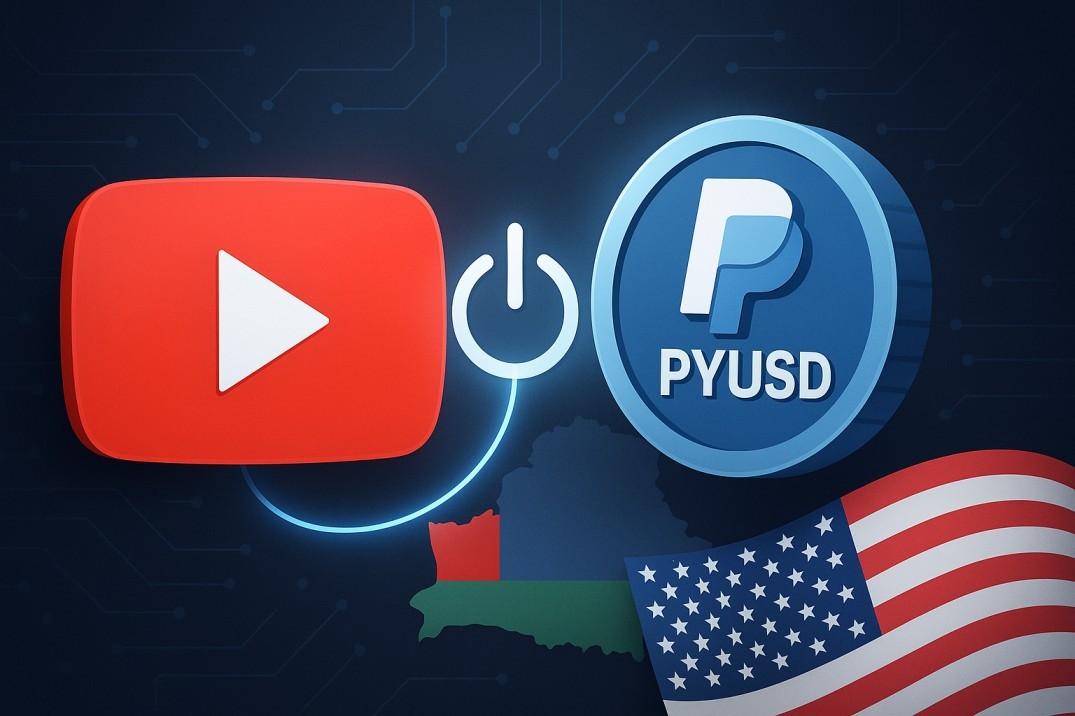
YouTube had many stablecoin options it could have considered, from USDC to USDT to other emerging brands. PYUSD winning this integration isn't surprising:
- YouTube already has a long-standing relationship with PayPal.
- PYUSD is built into PayPal's existing merchant and payout systems.
- PayPal integrates directly with Google services.
- PYUSD is positioned as a regulatory-first stablecoin.
The combination of familiarity, compliance readiness and easy integration likely made PYUSD the simplest first step. This also positions PayPal differently in the stablecoin landscape. PYUSD has spent the last year slowly finding openings in payment workflows - gaming platforms, fintech apps, commerce tools - and YouTube is easily its biggest win so far.
The Regulatory Angle Behind the Scenes
PayPal's stablecoin strategy has always leaned toward compliance. Paxos issues PYUSD under the supervision of US regulators, and PayPal's long-running payments history gives it a significant advantage when navigating banking rules.
YouTube, under Google, typically moves very carefully when integrating anything that resembles a currency. For example, YouTube didn't adopt crypto donations during the NFT boom and never moved into token launches even when Web3 trends were peaking.
This makes the PYUSD integration even more notable. It signals that some of the largest companies in tech are now comfortable experimenting with digital dollars - not speculative tokens, but stable digital cash. Regulators tend to view dollar-backed stablecoins differently from crypto assets like BTC or ETH. That gap is what's creating the space for these early integrations.
Closing Thoughts
YouTube allowing US creators to accept payouts in PYUSD might feel like a small update, but it marks a shift in how major digital platforms think about money movement. PayPal built the rails earlier this year, and YouTube has now decided to use them.
Creators get faster access to earnings. PayPal strengthens PYUSD's role as a digital dollar. And YouTube takes a step into a payment model that aligns with where finance is heading. If more platforms adopt similar payout options, stablecoins may quietly become one of the most practical, widely used forms of digital value - not because users become crypto experts, but because the systems they rely on begin offering it as a default.


