


Summary:
- Crafter is a live NFT marketplace built by long-time COTI community members, using COTI's encrypted URI system to protect NFT metadata and attributes.
- The marketplace launched on November 7, marking the beginning of a full NFT ecosystem on COTI.
- The marketplace recently added three new features: Telegram notifications, private chat with offer-makers, and public user profiles.
- This article explains how Crafter works, why its privacy layer matters, and how the new tools expand the user experience.
When Crafter went live on November 7, it wasn't just another NFT marketplace joining the pile. It marked something slightly different - the first fully functioning NFT hub built natively on COTI's privacy layer, designed by two developers who grew out of the COTI community itself. The marketplace arrived with a clear goal: make NFT creation, minting, and trading simple for everyday users, while still giving creators strong control over what stays private and what doesn't.
Months later, Crafter is expanding again, this time rolling out three new marketplace features that strengthen communication, visibility, and real-time updates. But before diving into these updates, it's worth stepping back and understanding why Crafter matters in the first place and why its approach to privacy could shape how people think about NFTs on COTI.
What Crafter Is Building - and Why It Started
Crafter didn't begin as a polished commercial product. It started as a small project by two COTI community members who wanted to turn the network's privacy tech into something tangible. Both founders came from the developer side but shared a simple goal: make blockchain tools usable for anyone, especially people who have ideas but not the technical skills to build smart contracts from scratch.
They didn't want a marketplace where only advanced users felt comfortable. They wanted something closer to a creative tool - upload your artwork, set your rules, mint when ready, and distribute however you like. The project stayed close to the community as it grew, and eventually evolved into a full marketplace powered by COTI's privacy technology. Their mindset hasn't changed:
That statement is more than branding; it's the foundation of how every NFT on the platform is designed.
How Privacy NFTs Actually Work Inside Crafter
Most NFT marketplaces expose everything - the metadata, the attributes, the full artwork. It's part of the culture of NFTs, but it also limits how NFTs can be used outside simple collectibles.
Crafter flips this structure using COTI's encrypted URI system. Instead of storing metadata openly, Crafter lets creators encrypt the entire set of attributes and unlock them only for the owner. The public sees the NFT exists, but not what's inside unless the creator chooses to reveal it.
It's a small design change with big implications. It turns NFTs into flexible ownership containers - something much more useful for real-world items, private membership passes, gated content, or even sensitive data structures. And because Crafter is built directly on COTI's privacy stack, creators don't have to set up anything manually. It all happens behind the interface.
For regular users, this means privacy is handled automatically. For creators, it means they can build collections that protect holders by default, without worrying about who can see what. And for the COTI ecosystem, it becomes a living example of how privacy can play out in everyday apps - not in theory, but in something people can actually use.
Streamlined NFT Creation for Everyone
Crafter makes NFT deployment surprisingly straightforward. Users can mint a single piece by uploading an image, adding metadata, and generating a mint link. They can also upload a full collection, configure parameters like mint start dates, and have Crafter generate a custom smart contract for the entire drop.
The idea is to remove friction. You shouldn't need years of Solidity knowledge to publish a collection. Crafter gives people the room to experiment and launch ideas without writing code - which is particularly valuable for early COTI builders.
This simplicity is part of what made the marketplace launch resonate across the COTI community. Names like COTI's BDM Brad, ambassador Soeren Jensen, ambassador Whoistracer and many community members publicly congtatulated and celebrated the launch. It wasn't just excitement - it was recognition that COTI now had a functioning, creator-friendly NFT marketplace built by its own ecosystem participants.
How the Marketplace Works Today
Crafter's marketplace operates with a few clear mechanics designed to protect sellers and buyers.
When someone purchases an NFT, the payment goes directly to the marketplace smart contract. The seller can withdraw their balance at any time, but it can't be reused inside the marketplace without withdrawing first. The idea is to keep flows clean and transparent.
Offers add another layer. If a seller accepts an offer, the buyer gets a 48-hour window to redeem it. During that time, the NFT is locked and marked "under agreement," preventing any competing bids or purchases. If the buyer doesn't follow through, the NFT is released automatically. All other pending offers disappear the moment one offer is accepted.
It's a system that encourages clarity. No shady sniping, no last-minute confusion, and no unexpected double sales. Everything is time-bound, trackable, and predictable.
Three New Crafter Features Expanding the Marketplace
The marketplace is evolving, and the team recently delivered three new tools that expand communication, responsiveness, and user visibility. Each one targets a real friction point noted by traders during the first wave of activity.
1. Telegram Notifications for Marketplace Activity
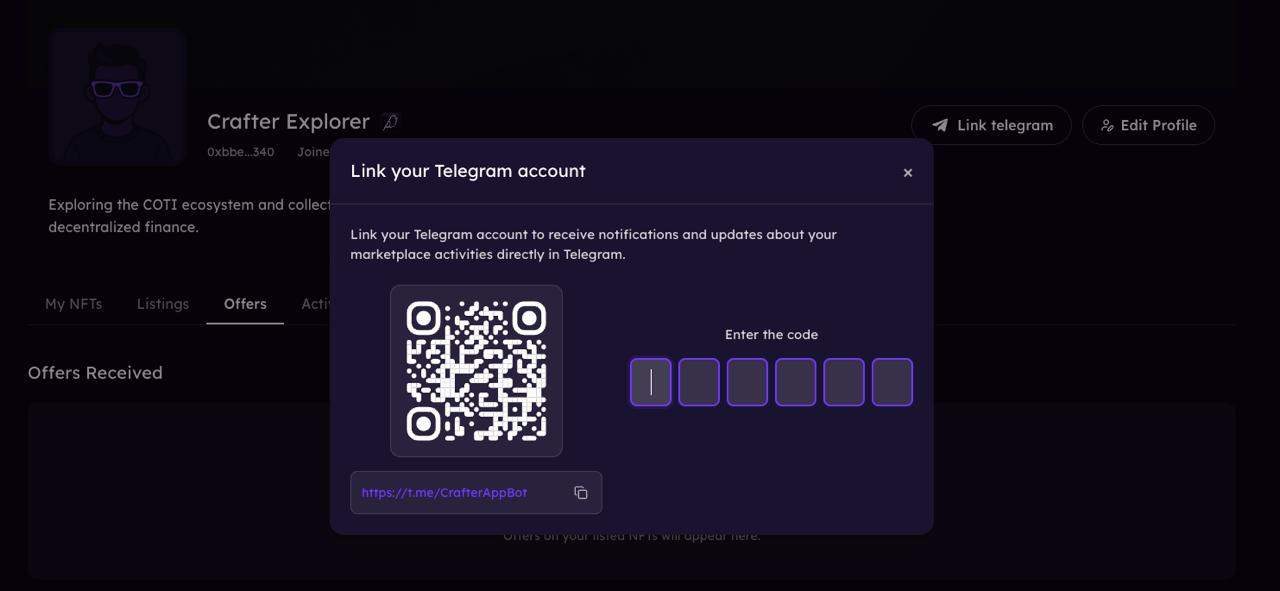
Users can now link their marketplace profile to Telegram and receive instant updates about offers, purchases, redemptions, and activity on their listings. It removes the need to constantly refresh the marketplace page and makes it easier for creators and traders to stay updated.
2. Direct Chat With Offer-Makers
A new chat feature lets sellers talk directly with people who submit offers. Negotiation becomes more personal. Sellers can ask questions, clarify intentions, and even discuss timing - something that rarely exists inside NFT marketplaces but feels natural the moment you try it.
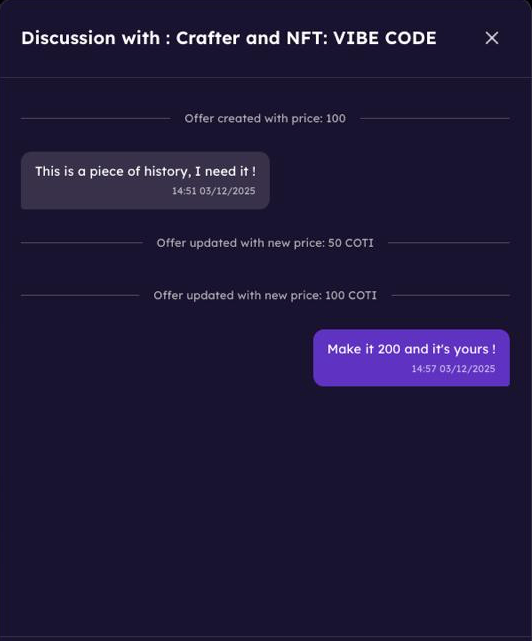
It also reduces the mismatches that often happen when buyers place unclear offers or fail to specify their reasoning. The conversation stays private and tied directly to the listing.
3. Clickable User Profiles
Profile browsing adds another layer of transparency. Users can now click on profiles to see recent activity, listings, and marketplace history. It builds trust without revealing anything private - a balance that matches Crafter's overall philosophy.
These updates might look small on the surface, but together they start shaping Crafter into a more social, dependable, and connected marketplace experience.
Why Crafter Matters for COTI's Long-Term Path
COTI's privacy layer is powerful, but real adoption requires people to actually build on it. Crafter is one of the first examples of how encrypted data structures, Garbled Circuits, and controlled visibility can shape everyday applications.
It gives developers something concrete to reference. It gives creators a place to experiment. It gives collectors a functioning marketplace that respects their data. And it gives the broader ecosystem a clear signal: privacy doesn't have to make things complicated.
Crafter sits at the intersection of creativity and infrastructure. It's simple enough for beginners, yet backed by technology that can scale into RWA, gaming, identity systems, and private asset ownership. Its growth - especially with the new communication tools - helps shape early standards for how privacy NFTs should behave.
What Comes Next
Crafter continues to evolve. The team is active, engaged with the community, and open about future plans. The marketplace is expected to add more discovery tools, improved creator pages, and expanded handling for encrypted metadata.
And because Crafter runs natively on COTI blockchain, every new feature doubles as a live stress test of the network's privacy stack. It helps surface improvements that will benefit upcoming builders - especially those planning applications involving private assets, sensitive data, or mixed physical-digital ownership.
The marketplace isn't a finished product. It's growing, adapting, and responding to the people who use it.
Final Thoughts
Crafter is one of the clearest examples of what COTI's privacy technology can do beyond theory. It takes encrypted metadata, Garbled Circuits, and ownership verification - and turns them into a real product the community can use right now.
The marketplace launch was already meaningful for COTI, but the new features push it further toward a well-rounded, community-driven platform. With direct messaging, Telegram integration, and profile exploration, Crafter is becoming more flexible and easier to operate daily.
Most importantly, it stays committed to a simple idea: users deserve control. Over their assets, their data, and their visibility. And that makes Crafter an early but important chapter in COTI's growing ecosystem.


